
The best self-leveling laser level is not simply the brightest green unit or the one with the most lines. It is the one that gives you a trustworthy level reference quickly, warns you when it cannot, and survives being carried from one room to the next. That distinction matters when you are lining up a row of cabinets, setting a shower-tile ledger, transferring a ceiling height, or hanging several frames that have to read as one clean line.
This guide looks at ten current options through that narrower lens: true pendulum self-leveling, what their out-of-level alert means, whether a locked-pendulum tilt mode is useful, and how the transport lock affects day-to-day ownership. We also compare compact cross-line lasers with 3×360° and 4×360° systems. A cross line is usually enough for picture hanging; a room-filling plane can save hours on tile, framing, and cabinet work.
One important expectation check: a green beam may be easier to see indoors, but it is not a magic daylight tool. For sunny exterior work, pulse mode and a compatible receiver matter more than the apparent brightness of the beam. Likewise, self-leveling corrects a modest setup tilt; it cannot compensate for a loose tripod, a vibrating ladder, or a laser that is placed far outside its stated leveling range.
Top 3 Best Self-Leveling Laser Levels
Huepar Pro 3×360° with 50-Inch Tripod

- Three green 360° planes for walls, floor, and ceiling
- Pendulum self-leveling with audible and flashing alert beyond ±3°
- Tripod, remote, magnetic bracket, and rechargeable power in one kit
CIGMAN 3×360° Green Laser Level

- Three selectable green planes and remote control
- Self-level, manual, and receiver-ready pulse modes
- Compact rechargeable package for tile and cabinetry
Bosch GLL50-20 Cross-Line Laser
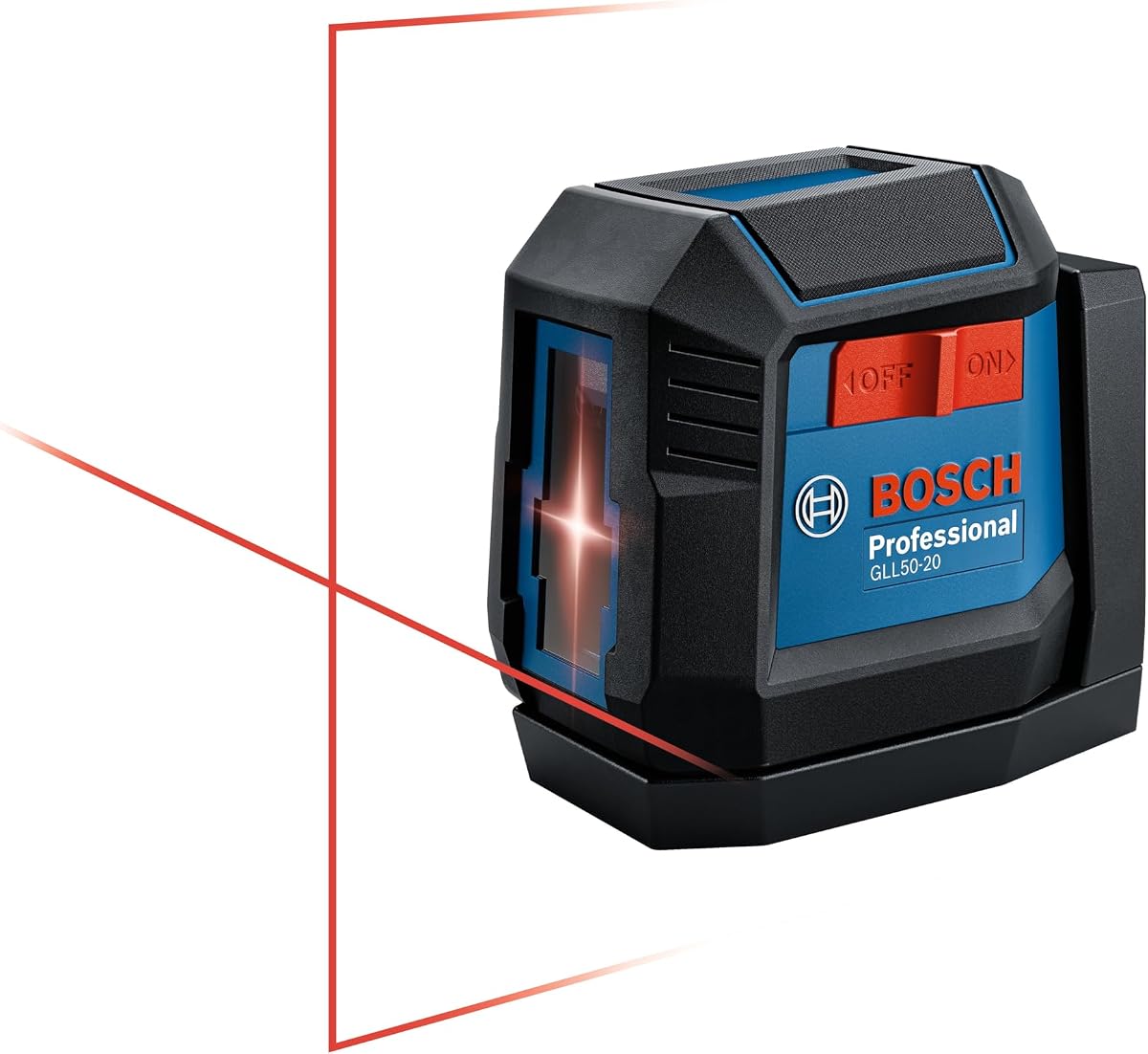
- Straightforward self-leveling cross line with blink warning
- IP55 housing and integrated magnetic mount
- AA convenience with optional Bosch lithium-ion battery support
Affiliate Disclosure: As an Amazon Associate we earn from qualifying purchases. We earn a commission, at no additional cost to you.
10 Self-Leveling Laser Levels Compared
There are no prices in this comparison because bundles and promotions move frequently. Instead, use the table to decide what kind of leveling system and mounting arrangement fit your work, then verify the current included accessories before ordering.
- Green cross line; four brightness settings
- ±4° self-level window; manual and pulse modes
- Tripod included; IP54 housing
- Red cross line; 50 ft class
- Self-leveling pendulum with blink alert
- IP55; magnetic mount; AA or optional battery
- Three green 360° planes
- ±4° self-level; manual and pulse modes
- Rechargeable, remote, magnetic rotating base
- Three bright green 360° planes
- Locked-pendulum tilt mode
- Rechargeable; magnetic mount; IP54
- Green cross line; 100 ft indoor claim
- Self-level, manual, pulse modes
- USB-C rechargeable; rotating magnetic bracket
- Three green 360° planes
- ±3° alert; locked-pendulum manual mode
- Tripod, remote, bracket, rechargeable battery
- Red self-leveling cross line
- Approx. 1/8 in. at 30 ft
- Overmolded housing, magnetic bracket, IP54
- Four green 360° planes
- ±4° flashing and audible alert
- Tripod, remote, manual and pulse modes
- Green cross line with brightness choices
- ±4° self-level range; manual and pulse modes
- 25.6-inch tripod; IP54
- Green cross line plus plumb spot
- Automatic out-of-level flash alert
- Magnetic mount and base cutout for track
We earn a commission, at no additional cost to you.
Detailed Product Reviews
1. Motovera 100ft Green Cross Line

Motovera makes the most sense for the homeowner who wants a complete first laser kit, not a bare device followed by three extra purchases. Its unlocked pendulum levels the green horizontal and vertical lines within about four degrees. If the setup is tipped too far, the line flashes instead of quietly presenting an inaccurate reference. That is the behavior a real self-leveling laser should deliver.
- Green cross-line projection
- ±4° self-leveling range
- Manual and pulse functions
- Four brightness modes
- Tripod and IP54 body
- Tripod removes a common first-buying obstacle
- Clear green line for normal indoor rooms
- Pendulum warning is easy to understand
- Manual mode handles deliberate slopes
- Brightness settings can conserve power
- Cross line does not replace room-wrapping planes
- Included tripod is convenience grade
- Receiver is not the same as included receiver support
The useful detail is that manual mode is separate from automatic leveling. Lock the pendulum, select the line, and you can project a reference up a stair stringer or along an intentionally sloped feature. Treat its periodic flashing as a reminder that the line is no longer level; it is not an error. That distinction prevents a surprising number of crooked shelf installations.
Four brightness choices are more practical than they sound in a dim room, where the highest setting can be unnecessarily intense. The supplied tripod is enough for picture rails, backsplash starts, and basic tile work. For long rooms, use a sturdier stand and do a two-wall accuracy check before committing to grout or cabinet fasteners.
Who should choose the Motovera?
Choose this kit for indoor DIY work where a cross line and a ready-to-use tripod solve the whole job. Move up to a 360° model when you routinely need the same elevation around several walls without repositioning the laser.
We earn a commission, at no additional cost to you.
2. Bosch GLL50-20
The Bosch GLL50-20 is the choice for someone who values predictable behavior over an impressive-looking feature list. Its pendulum automatically seeks level and its out-of-level condition is communicated by blinking, so the user is never asked to infer whether a tilted line is trustworthy. Switching it off locks the mechanism—a small habit that matters when the tool spends its life in a tool bag.
- Red cross line
- Self-leveling ±5/16 in. at 30 ft
- Integrated magnetic mount
- IP55 dust and water resistance
- Two AA batteries included
- Simple controls reduce setup mistakes
- IP55 is reassuring on active remodels
- Magnetic mount is excellent on steel track
- AA batteries are easy to replace
- Off switch locks pendulum for travel
- Red is less visible than green in bright interiors
- 50-foot class projection is modest
- No tilt/manual angled-line feature is highlighted
The red beam is the tradeoff. In a shaded bathroom or a room with controlled light, it is crisp enough for outlets, blocking, shelving, and a straight tile starter. In a white kitchen with open windows, green has a visibility advantage. Bosch partly offsets that limitation with a compact form, an integrated mount, and IP55 resistance that better suits renovation debris than many consumer-focused kits.
It also gives buyers a sensible power decision: use the included AA cells, or add the compatible Bosch lithium-ion battery later. Keep this laser for square, horizontal, and vertical references. If your project involves repeated sloped lines, select a model with a clearly stated locked-pendulum manual mode instead of trying to work around the warning flash.
Why the transport lock matters here
The pendulum is a moving calibration component. Turning the Bosch off before moving it locks that assembly and helps prevent damage from bumps. Put the lock into your pack-up sequence, not just your storage routine.
We earn a commission, at no additional cost to you.
3. CIGMAN 3×360°
CIGMAN is the compelling answer when a basic cross line has become the bottleneck. Three 360-degree green planes let you establish a horizontal elevation plus two vertical references around a room. That means you can tile a wall, carry a cabinet datum to an adjacent wall, and check a corner without constantly turning or relocating the tool.
- Three 360° green planes
- ±4° self-leveling
- Manual and pulse modes
- Rechargeable battery and remote
- IP54 protection
- Floor, wall, and ceiling references from one position
- Remote avoids repeated trips back to the tool
- Green planes improve indoor sighting
- Manual mode supports angle layouts
- Compact for a 3×360° unit
- IP54 is not heavy-rain jobsite protection
- Receiver is a separate compatibility question
- More planes mean more battery draw
The pendulum self-levels within a stated four-degree window. Outside that range, do not try to interpret the flashing as a usable line; adjust the bracket or tripod until the alert stops. For a stair rail or an intentional diagonal, lock the pendulum and enter manual mode. The fact that it remains visible while locked is useful, but it must never be treated as an automatic level line.
The remote is an underrated inclusion. Turning off unused planes makes the active line easier to see and gives the rechargeable battery an easier day. Pulse mode can work with a compatible receiver for bright conditions, but buyers should verify receiver compatibility rather than assuming every detector will communicate with it. This is an indoor layout standout, not a substitute for an outdoor rotary system.
Best jobs for three planes
Use the CIGMAN for cabinet runs, shower layout, suspended-ceiling references, and multi-wall tile. One carefully placed setup can replace several cross-line moves, provided the tripod itself is stable.
We earn a commission, at no additional cost to you.
4. Klein Tools 93CPLG

The Klein 93CPLG earns its place because it brings three full green planes into a compact package without treating the pendulum lock as an afterthought. Unlock it for normal automatic level and plumb work; lock it for tilt mode when the job genuinely calls for an angle. That is a more deliberate workflow than forcing a self-leveling tool to operate on a slope.
- Three green 360° planes
- Up to 100-foot projection claim
- Rechargeable 6+ hour runtime
- Tilt mode with locked pendulum
- Magnetic mount and IP54 body
- Small footprint for a three-plane tool
- Green lines are strong for interior layout
- Dedicated tilt capability is explicit
- Rechargeable runtime suits a workday
- Klein's overmolded body feels job-ready
- Tripod is not part of the base appeal
- IP54 is not IP65
- A full plane system can be excessive for simple hanging
For electricians and remodelers, the magnetic mount is more than a convenience. It makes quick placement on steel studs or track possible, while the small housing is easier to position in a closet, alcove, or mechanical room. The stated six-plus-hour rechargeable runtime is suitable for intermittent layout work, though every active plane consumes more energy than a single cross line.
This is a professional-feeling choice for people who regularly transfer elevations between walls. It is less persuasive for a buyer who only hangs art twice a year; a compact cross-line laser is faster to grab and easier to justify. Whatever you choose, store it with the pendulum locked. The lock protects the same mechanism that makes the self-level function credible.
Tilt mode is a tool, not a shortcut
Klein's tilt mode is useful for stair rails, decorative diagonals, and aligning to an existing slope. It is not appropriate for setting cabinets, doors, or any element that actually needs to be level.
We earn a commission, at no additional cost to you.
5. Fanttik D2 Pocket

The Fanttik D2 is proof that a self-leveling laser does not have to become another large case in the garage. It is a pocket-sized green cross-line tool with a magnetic rotating bracket, so it is particularly comfortable for a row of frames, curtain rods, shelves, and small accent-wall projects. Its small size changes how often you will actually use it.
- Green cross line
- 1/8 in. at 30 ft accuracy claim
- USB-C rechargeable 2200 mAh battery
- Rotating magnetic bracket
- Self-level, manual, and pulse modes
- Easy to keep in a drawer or tool pouch
- Long claimed runtime for its size
- Bracket rotates without moving the mount
- USB-C is convenient for homeowners
- Pulse mode adds receiver flexibility
- Not a whole-room 360° layout tool
- Light body needs a solid mounting surface
- Receiver is not supplied
With the pendulum unlocked, the D2 provides a standard automatic horizontal and vertical reference. When you lock the pendulum for manual mode, it can follow a chosen angle, but the recurring reminder flash should be taken seriously: you have intentionally disabled level compensation. That distinction is essential when switching between a decorative diagonal and a shelf that must not roll objects.
The rotating bracket is the feature that makes this more flexible than a laser placed directly on a countertop. Set the mount, rotate the body to fine-tune the line, then mark rather than repeatedly relocating the whole assembly. Its claimed ten-hour runtime and USB-C charging are friendly for home use. For a large tile room, however, the time saved by a 360-degree plane can outweigh this tool's excellent portability.
A sensible first laser for homeowners
The D2 is a strong fit if your projects are mostly alignment tasks, not room-wide layout. Buy a tripod separately if you will often need a line at chest height in open rooms.
We earn a commission, at no additional cost to you.
6. Huepar Pro 3×360°
For most remodelers who want to buy one serious indoor layout kit, the Huepar Pro is the cleanest recommendation. It includes the hardware that is often omitted from bare lasers: a usable 50-inch tripod, a magnetic rotating bracket, remote control, and rechargeable power. More importantly, its self-leveling behavior is explicit: it settles when within about three degrees and signals both by flash and beep when it is not.
- One horizontal and two vertical green 360° planes
- Self-levels within ±3°
- Flashing and beeping out-of-level warning
- 50-inch tripod and magnetic bracket
- Remote control and rechargeable battery
- Exceptional coverage for cabinets and tile
- Tripod means useful working height immediately
- Alert uses both visual and audible cues
- Seven line combinations limit clutter
- Standard mounting threads broaden accessory options
- More kit to carry than a cross-line laser
- Tripod requires careful leg setup
- Outdoor use still benefits from a receiver
That audible alert is genuinely helpful when the laser is behind you or mounted above eye level. It tells you to correct the setup before you make a reference mark. Once level, choose only the planes you need. A horizontal plane can establish cabinet height around the room; the vertical planes handle plumb and corner alignment. The remote is useful when you are checking a line across a large room.
Locking the pendulum creates manual mode for angles. Treat that mode as an optical straightedge, not a level. The included tripod is a real advantage, but extend and lock every leg before mounting the laser; a loose pan head or partially extended leg can mimic a leveling problem. This kit is our top pick because it gets the operational details right, not just because it projects many lines.
Why it is our overall choice
The Huepar bundles useful mounting, broad plane coverage, clear out-of-level feedback, and a real manual mode. It suits a buyer stepping into cabinets, tile, drywall, or room-scale renovation.
We earn a commission, at no additional cost to you.
7. DEWALT DW088K

The DEWALT DW088K is for the buyer who would rather own a durable, uncomplicated cross-line laser than a feature-rich generic system. Its self-leveling mechanism and integrated bracket are built around the normal rhythm of finish work: mount it, wait for the line to settle, make marks, then return it to the protective case. The one-meter drop rating and IP54 rating make that rhythm less nerve-racking.
- Red horizontal and vertical lines
- Approx. 1/8 in. at 30 ft
- Integrated magnetic bracket
- 1-meter drop rating
- IP54 resistance and storage case
- Established jobsite-oriented construction
- Integrated mount is fast on metal
- Case encourages safe transport
- Detector use can extend working range
- Simple cross-line format is quick to learn
- Red beam has lower apparent brightness
- No 360° plane coverage
- Tripod is sold separately
Its red beam is the tradeoff against newer green alternatives. A red line can be perfectly adequate in controlled indoor light, and it remains a sensible choice for framing, trim, and repeatable interior layout. In bright rooms, use a target card, reduce daylight where practical, or choose a green model. Do not judge accuracy only by how bright a line looks.
The detector-compatible range claim is useful in the right setup, but a detector is separate. The fundamental tool remains a cross-line laser, which keeps it focused and fast. The magnetic bracket and 1/4-inch-20 thread provide two mounting paths; whichever you use, keep the pendulum protected during transport and recheck the line after a serious impact.
A durable option for repeat work
This is an excellent choice for trim, framing, and electrical layout where a simple horizontal and vertical reference is all that is required. It is not the most efficient format for wrapping tile layout around a full room.
We earn a commission, at no additional cost to you.
8. CinusLinus 4×360°

A four-plane laser has one clear advantage over a typical 3×360° unit: it can put a horizontal reference near the floor and another near the ceiling without moving the body. That is valuable when setting floor tile, checking a dropped ceiling, or transferring a datum through a renovation. The CinusLinus kit puts that capability into a bundle with a tripod and remote.
- Two horizontal and two vertical green 360° planes
- ±4° self-leveling range
- Flashing and audible tilt alert
- 47-inch tripod and remote
- Manual and pulse modes
- Extra horizontal plane is useful for flooring
- Tripod and remote are included
- Four planes reduce repositioning
- Manual mode supports intentional angles
- Audible alert communicates an invalid setup
- Best treated as indoor-focused
- Included tripod is not survey equipment
- Initial accuracy check is especially important
Its self-leveling procedure is conventional and reassuring. Unlock the pendulum, start close to level, and wait for the unit to settle. If the tilt exceeds the stated four-degree range, flashing and an audible warning indicate that the projected lines must not be trusted as level. Locking the pendulum allows angled use, but the same rule applies: a manual line is a chosen angle, not a corrected one.
This is a feature-forward kit, so setup discipline matters. Confirm the tripod's legs are fully extended and the quick-release plate is tight before concluding that the pendulum is unstable. Check accuracy by marking a line, rotating the tool, and comparing the return line before using it for expensive finish work. For indoor renovation, the extra plane can be worth more than a marginal range claim.
When four planes are worthwhile
Choose four planes when you regularly need both a floor line and a higher horizontal reference. For picture hanging or one backsplash, the added complexity and bulk are unnecessary.
We earn a commission, at no additional cost to you.
9. Motover Green Cross-Line

The Motover kit is a sensible option for small rooms where a compact tripod is more useful than a large stand. It projects a green cross line, offers three brightness choices, and self-levels within its stated four-degree window. The important part is not the broad marketing language around rotation; this should be approached as a cross-line alignment tool rather than a replacement for a professional rotary grade laser.
- Green horizontal and vertical lines
- ±3 mm at 10 m stated accuracy
- Three brightness settings
- ±4° self-leveling and pulse mode
- 25.6-inch tripod; IP54
- Compact kit stores easily
- Brightness adjustments help manage indoor conditions
- Tripod gives a stable starting platform
- Pulse mode keeps receiver option open
- Manual mode allows custom slopes
- Short tripod is not ideal for all elevations
- Marketing language should not be confused with rotary surveying
- Not designed for intense direct sunlight
Use the unlocked pendulum setting for any task where level and plumb are the goal. If the beam flashes, reposition the tripod or adjust its head until the alert clears. The 25.6-inch tripod keeps the laser portable, but it may need to sit on a countertop, box, or bench for a full-height wall reference. Never balance it on an unstable stack simply to gain height.
Manual mode has a place for a handrail or a deliberately sloped pattern. Pulse mode can improve usable receiver work, though it does not make an exposed green beam visible in full sun. For its intended indoor use—shelves, doors, wallpaper, and small tile starts—the combination of a stable base and a true warning system is what makes it useful.
Set realistic expectations outdoors
Pulse mode is an interface for a compatible receiver, not an outdoor-brightness switch. If exterior layout is your regular job, select a detector-oriented kit with a known compatible receiver.
We earn a commission, at no additional cost to you.
10. Klein Tools 93MCLPG

The Klein 93MCLPG is the specialist in this roundup. A standard green cross line handles horizontal and vertical layout, but the added plumb spot makes it especially useful for transferring a point from floor to ceiling or aligning fixtures, boxes, and penetrations. That is a meaningful upgrade for electrical and mechanical work, not just another line-count statistic.
- Green cross line plus plumb spot
- Up to 75-foot working range claim
- Automatic out-of-level flashing
- Magnetic mount
- Base cutout for 2×4s and metal track
- Plumb spot solves point-transfer jobs cleanly
- Cross line remains simple for normal alignment
- Base cutout broadens placement options
- Compact enough for tight spaces
- Magnetic mount helps on metal framing
- Not a 360° room-layout system
- A plumb spot is specialized for some homeowners
- Tripod is not the central package feature
Its automatic out-of-level detection is exactly what you want from a compact self-leveling laser: when the tool cannot establish a valid reference, it flashes. Do not try to defeat that alert by shimming a wobbly surface with scraps; use the magnetic mount, the base cutout on a suitable stud or track, or a stable tripod. A reliable mount makes the pendulum faster and the marks more repeatable.
Choose this Klein if point transfer is part of your work. For full-room cabinet or tile layout, the three-plane 93CPLG or another 3×360° model is a better productivity tool. As with every pendulum laser, transport it protected, inspect the window, and verify its line on a known reference after a hard knock.
Cross line versus plumb point
A plumb point is for moving an exact location vertically. It does not replace a 360° plane for carrying an elevation around a room. Buy it when the point-transfer problem is real and recurring.
We earn a commission, at no additional cost to you.
Buying Guide: What a True Self-Leveling Laser Should Do
The phrase “self-leveling” is often used loosely. A worthwhile laser has a pendulum or electronic compensator that actively establishes level within a specified tilt window, warns when it is outside that window, and can be secured for transport. Those three behaviors matter more than a long list of accessory claims.
Confirm the self-leveling range and alert
Most tools here level within roughly ±3° to ±4°. That is a setup tolerance, not permission to mount the laser on a severely tilted ladder. When the unit is out of range, it should flash, beep, or both. Stop and correct the mounting angle; an alert is the laser protecting you from a false level reference.
Before a critical job, deliberately tip the laser slightly and observe the warning. This simple test teaches you what normal behavior looks like and confirms that you have not confused manual mode with a fault.
Understand pendulum lock and transport protection
A pendulum laser contains a moving, calibrated assembly. On many models, the power switch also locks it. Always lock the pendulum before placing the laser in a bag, case, or truck. The lock reduces the chance that repeated impacts affect calibration.
Do not force a locked mechanism. If a laser will not self-level, first check that it is actually unlocked and positioned within its operating range. A transport lock is not merely a storage feature; it is part of the product's long-term accuracy strategy.
Use manual or tilt mode correctly
Manual mode deliberately disables automatic level compensation so you can make an angled line. It is useful for stair rails, raked trim, and decorative patterns. Many models blink periodically in this mode. That is a reminder that the beam is straight but not level.
Never use a manual-mode line to set cabinets, flooring, shelves, or any installation that requires true level. Return to unlocked self-leveling mode, wait for the beam to settle, and ensure the out-of-level warning is inactive.
Choose cross-line, 3×360°, or 4×360° by workflow
A cross-line laser gives one horizontal and one vertical reference. It is the fastest, least bulky choice for frames, shelves, small tile areas, and trim. A 3×360° laser creates continuous planes that can carry a datum around walls, across a ceiling, and down to a floor.
A 4×360° model adds another horizontal plane, typically helpful for simultaneous floor and ceiling work. It is valuable for frequent renovation or tile layout, but it costs space, battery life, and setup attention. More lines do not automatically improve a simple job.
Prioritize mounting before maximum range
A laser cannot self-level a shaky mount. Magnetic brackets are ideal on steel framing; tripods are better in open rooms; a rigid countertop can work for low references. Ensure every tripod leg is locked and the head does not creep after you release it.
Visible indoor range and detector working range are different measurements. Green usually appears brighter to the eye indoors, but direct sun overwhelms both green and red lines. Exterior work calls for pulse mode plus a compatible receiver, not optimistic expectations.
How to Use a Self-Leveling Laser Level Safely and Accurately
1. Start with a rigid surface, magnetic mount, or tripod. Position the tool roughly level, tighten every adjustment, and keep the beam out of eyes. A laser level is an alignment tool, not a toy; follow its Class 2 safety guidance and avoid deliberate viewing of the beam.
2. Unlock the pendulum and select only the line or plane you need. Wait for movement to stop. If the beam flashes or the unit beeps, it is beyond its self-leveling range—adjust the support until the warning clears. Mark light reference points first, then verify before drilling, fastening, or spreading adhesive.
3. For a deliberate angle, lock the pendulum and select manual or tilt mode. Expect a reminder flash on many models. Use the projected line as an angled guide only; it is no longer a level or plumb reference. Switch back to automatic mode before returning to normal layout.
Frequently Asked Questions
What is the best self-leveling laser level overall?
For most indoor renovation buyers, the Huepar Pro 3×360° kit is the strongest all-round choice because it combines useful plane coverage with a tripod, clear audible and visual out-of-level alerts, and locked-pendulum manual mode. Choose a compact cross-line model instead if your work is mainly shelves and frames.
What does a flashing laser line mean?
Usually it means the tool is outside its self-leveling range or is in manual/tilt mode. In automatic mode, reposition the laser closer to level until the warning stops. In manual mode, the flashing is often a normal reminder that the projected line is not level.
Does self-leveling mean the laser can be placed anywhere?
No. A pendulum only compensates within a limited angle, commonly around three or four degrees. It cannot correct a severely tilted setup, a loose tripod, vibration, or a mounting surface that shifts while you mark.
Why should I lock the pendulum for transport?
The pendulum contains the moving calibration mechanism. Locking it reduces movement and impact risk in a bag or vehicle. It is a small habit that can help preserve accuracy and prevent damage over the life of the tool.
Is green better than red for a self-leveling laser?
Green is generally easier to see indoors, especially in bright rooms, while red can remain accurate and durable at a lower cost. Neither visible beam is reliably easy to see in direct sun; outdoor work requires pulse mode and a compatible receiver.
Do I need a 360-degree laser level?
Choose 360° planes for cabinets, multi-wall tile, ceilings, or any job where moving a cross-line laser repeatedly wastes time. For a picture wall, shelf, or single backsplash, a reliable cross-line laser is usually simpler and sufficient.
Final Verdict: Choose the Leveling System You Will Trust
The best self-leveling laser level is one you can mount securely, interpret correctly, and protect between jobs. The Huepar Pro 3×360° kit is our overall choice for room-scale interior work; the CIGMAN is the value full-plane alternative; and the Bosch GLL50-20 is the uncomplicated, rugged cross-line pick. For fast household tasks, the Fanttik D2 is easier to live with than a larger system.
Buy according to workflow. Cross lines are ideal for focused alignment, 3×360° systems shine in kitchens and bathrooms, and four-plane units earn their keep when floor and ceiling references are both routine. Most importantly, respect the pendulum alert, use manual mode only for intentional angles, and lock the mechanism before transport. Those habits matter more than another advertised line or range number.
Before publishing, replace YOURTAG-20 with your Amazon Associate tracking tag and confirm current kit contents on each live product listing.